
 中文简体
中文简体

Product Consultation
Your email address will not be published. Required fields are marked *
Content
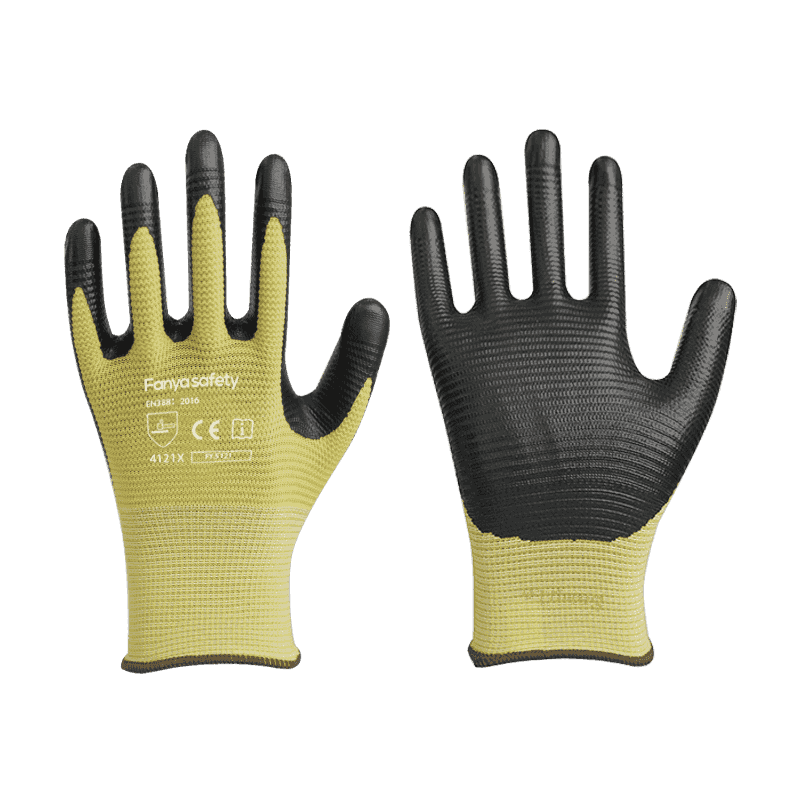
Nitrile gloves are not suitable for use with ketones (like acetone and MEK), certain esters, strong oxidizing acids, and aromatic or halogenated solvents such as toluene, xylene, and methylene chloride. They also fall short in high-heat environments, during electrical work involving high voltage, and in tasks requiring extreme cut or puncture resistance. If you are working with any of these substances or conditions, nitrile is the wrong glove — full stop.
Nitrile has become the default disposable glove in labs, medical settings, food processing, and automotive work, and for good reason: it resists oils, fuels, many acids, and a wide spectrum of common chemicals better than latex or vinyl. But the glove's popularity has created a dangerous assumption — that nitrile works for everything. It does not. Understanding exactly where nitrile fails can prevent chemical burns, exposure injuries, contamination, and worse.
The most dangerous misuse of nitrile gloves involves chemical exposure. Many users assume that because nitrile resists motor oil and dilute acids, it handles all hazardous chemicals. That logic is flawed. The chemistry of nitrile rubber — a copolymer of acrylonitrile and butadiene — gives it selective chemical resistance, not universal protection.
Acetone, methyl ethyl ketone (MEK), methyl isobutyl ketone (MIBK), and ethyl acetate cause nitrile to swell, soften, and lose structural integrity within minutes. In independent permeation testing, acetone has been shown to break through a standard 4–6 mil nitrile glove in under 10 minutes. If you are stripping nail polish, working with paint thinners, or handling solvent-based adhesives that contain these compounds, nitrile offers almost no real protection.
Methylene chloride (dichloromethane), chloroform, trichloroethylene, toluene, and xylene all permeate nitrile at rates that make the glove practically useless as a barrier. These solvents are commonly used in paint stripping, pharmaceutical synthesis, industrial cleaning, and laboratory extractions. Toluene, for instance, can permeate a standard nitrile glove in as little as 5–8 minutes — fast enough that a user who feels no immediate sensation may still absorb dangerous levels through the skin before noticing anything wrong.
Concentrated nitric acid, fuming sulfuric acid, and chromic acid attack nitrile rubber aggressively. While nitrile handles dilute sulfuric and hydrochloric acid reasonably well, concentrated oxidizers are a different category. In a laboratory or industrial environment where concentrated nitric acid is being used — for metal etching, chemical synthesis, or cleaning — butyl rubber or a laminated glove like Silver Shield is a far safer option.
Aniline, dimethylamine, and some aliphatic amines degrade nitrile more rapidly than commonly assumed. Formaldehyde permeates nitrile at moderate rates, which is particularly relevant in histology labs and embalming settings where glove integrity is critical. Always verify with published permeation data, not general assumptions.
| Chemical | Nitrile Performance | Recommended Alternative |
|---|---|---|
| Acetone | Poor — breakthrough <10 min | Butyl rubber, Silver Shield |
| Toluene | Poor — breakthrough 5–8 min | Butyl rubber, neoprene |
| Methylene chloride | Very poor | Silver Shield / 4H laminate |
| Conc. nitric acid | Poor for concentrated forms | Butyl rubber |
| MEK | Poor — rapid swelling | Butyl rubber, Silver Shield |
| Formaldehyde | Moderate — verify by task | Butyl rubber for heavy exposure |
Nitrile rubber is not rated for sustained heat exposure. Standard disposable nitrile gloves begin to soften and deform at temperatures around 120–150°C (248–302°F), and they offer zero protection against open flame. Using nitrile near welding arcs, open burners, molten metal, or industrial ovens is a serious hazard.
In kitchen environments, nitrile disposable gloves are not appropriate for handling oven trays, hot pans, or any surface above roughly 60°C. Even the thicker industrial-grade nitrile gloves are not designed as heat-resistant PPE in the way that leather welding gloves, aluminized gloves, or silicone oven mitts are. The glove can melt onto skin, causing additional burn injury.
For foundry work, glassblowing, welding, and high-temperature food service tasks, the appropriate choice is a leather welding glove, a heat-resistant Kevlar glove, or an aluminized glove rated for the specific temperature range involved.
This is a commonly misunderstood point. Nitrile does have some inherent electrical resistance — it is not fully conductive — but standard nitrile gloves carry no electrical safety rating and should never be used as primary protection during electrical work on live circuits, even at household voltages (120V or 240V).
Electrical safety gloves used by linemen and electricians must meet ASTM D120 or IEC 60903 standards, which classify gloves into voltage classes ranging from Class 00 (rated up to 500V AC) through Class 4 (rated up to 36,000V AC). These are thick, purpose-built rubber gloves that undergo regular dielectric testing. A thin nitrile examination glove is not a substitute — it provides no certified arc flash or shock protection.
Some electricians wear thin nitrile gloves inside their rated rubber insulating gloves to prevent the interior of the rubber glove from contacting skin directly — improving grip and hygiene — but this is a secondary use, not a safety function. The nitrile layer in this case provides zero electrical protection on its own.
Disposable nitrile gloves — typically 4 to 8 mil thick — offer minimal mechanical protection. They are designed as a barrier against chemical, biological, and contamination hazards, not against physical injury. Using them for tasks that involve sharp edges, metal burrs, glass shards, broken ceramics, or wire handling is a recipe for lacerations.
For context, a standard 6 mil nitrile exam glove has an ASTM puncture resistance that is measured in ounces, not pounds. A cut-resistant glove made with Kevlar, Dyneema, or HPPE (high-performance polyethylene) fibers provides cut protection rated at ANSI/ISEA 105 levels A2 through A9 — a completely different order of magnitude.
Tasks where nitrile gloves are physically inadequate include:
Even thicker industrial nitrile gloves — 12 to 15 mil — offer modest improvement in puncture and abrasion resistance, but they still should not be the primary protection where cut hazards are present.
Nitrile is often recommended as a latex-free alternative for people with latex allergies, and that recommendation is generally sound — nitrile and latex are chemically distinct materials. However, nitrile gloves are not allergy-neutral for everyone. They contain chemical accelerators used in the vulcanization process, most notably thiurams (such as tetramethylthiuram disulfide) and carbamates.
These accelerators are among the most common causes of Type IV (delayed) allergic contact dermatitis reported in healthcare workers. Studies in occupational dermatology have found that accelerator-related contact dermatitis affects between 2% and 17% of healthcare workers who wear nitrile gloves regularly, with symptoms including redness, itching, blistering, and skin thickening appearing 12–72 hours after exposure.
For individuals who react to these accelerators, accelerator-free nitrile gloves are available and are increasingly standard in surgical and high-risk clinical settings. Alternatively, polychloroprene (neoprene) gloves or vinyl gloves (for low-risk tasks) may be considered. Anyone experiencing persistent skin reactions while wearing nitrile gloves should seek patch testing from a dermatologist rather than continuing to use the product.
Even for chemicals that nitrile technically "resists," glove thickness and exposure duration matter enormously. Most published permeation data for nitrile is based on continuous contact testing. A 4 mil glove rated for use with dilute sulfuric acid may be appropriate for a brief 10-minute task, but wearing the same glove for a 4-hour production shift involving repeated splashing creates a fundamentally different risk profile.
The concept here is cumulative permeation — the chemical does not need to break through instantly to cause harm. Micro-permeation over extended periods can result in dermal absorption that becomes clinically significant. For tasks involving prolonged or repeated chemical contact, thicker industrial nitrile (12 mil or greater) or a different material altogether — such as neoprene or butyl — is necessary.
In pharmaceutical manufacturing and research environments, this distinction is codified in standard operating procedures. Workers handling cytotoxic drugs such as chemotherapy agents, for example, are often required by NIOSH guidelines to use double-gloving with chemotherapy-tested nitrile or switch to other tested glove types entirely, precisely because single-layer protection is insufficient for extended exposure.
Nitrile gloves provide no shielding against ionizing radiation. In nuclear medicine, radiopharmacy, or radiological research, specialized lead-lined gloves or attenuation gloves are required for handling radioactive materials. Wearing nitrile gloves in these settings may satisfy a contamination-control purpose — preventing skin contamination from radioactive particles — but they do nothing to reduce radiation dose to the hands.
At the opposite extreme, nitrile becomes brittle and cracks when exposed to cryogenic temperatures. Liquid nitrogen (-196°C / -321°F) and dry ice (-78°C / -108°F) make standard nitrile gloves rigid and prone to fracturing, which both eliminates their protective function and can cause the glove material itself to break against the skin. Cryogenic work requires insulated cryogenic gloves made from materials specifically designed to remain flexible at extreme cold.
Not all nitrile gloves are sterile. The majority of nitrile examination gloves sold in bulk boxes are non-sterile, meaning they are manufactured under controlled conditions but are not individually packaged and validated to a sterility assurance level (SAL) of 10⁻⁶. Using non-sterile nitrile gloves for invasive surgical procedures, sterile compounding, or wound care where sterile technique is clinically required is a patient safety issue.
Sterile nitrile surgical gloves exist and are widely used — but they are a distinct product, individually packaged and tested, and they cost more. The distinction matters in clinical settings. A box of non-sterile exam gloves sitting at a nursing station is appropriate for routine assessment and specimen handling, not for anything requiring a sterile field.
Similarly, in cleanroom manufacturing — semiconductor fabrication, aerospace component assembly, ISO Class 4 or 5 environments — standard nitrile gloves shed particles at rates incompatible with contamination requirements. Cleanroom-specific nitrile gloves that are double-bagged, low-particulate, and tested for extractables are required in those environments.
Disposable nitrile gloves — the standard examination and industrial-use products found in bulk boxes — are designed for single use. Reusing them after chemical or biological exposure defeats their core protective purpose. Once a nitrile glove has been exposed to a chemical, even one it nominally resists, the material may have undergone micro-level permeation or structural changes that are not visible to the eye.
In healthcare settings, the CDC explicitly states that disposable gloves should not be washed and reused, as washing does not restore barrier integrity and may remove the glove's interior coating, increasing the risk of skin irritation and reducing donning ease. The same principle applies in laboratory and industrial contexts.
For tasks that require reusable glove protection, thick reusable nitrile gloves rated explicitly for reuse — typically 18 mil or greater, tested to specific standards — are available and appropriate. These are a different product category from disposable examination gloves, and they still require inspection before each use and replacement on a defined schedule.
The starting point for any glove selection decision is the Safety Data Sheet (SDS) for the chemical you are working with, combined with published glove permeation data from manufacturers like Ansell, Kimberly-Clark, or Showa. Most major glove manufacturers publish chemical resistance guides that list breakthrough times for specific chemicals at specific glove thicknesses — these tables are the reliable reference, not general assumptions about glove material categories.
As a general orientation guide:
No single glove material covers every hazard. Complex industrial or laboratory environments often require multiple glove types for different tasks, and double-gloving — wearing an inner and outer glove of different materials — is sometimes the correct strategy for mixed or unknown chemical hazards.
The right question to ask before any task is not "should I wear gloves?" but "what specific glove is rated for this specific hazard at this exposure level and duration?" Nitrile is an excellent answer to that question in many situations — but knowing when it is the wrong answer is just as important.
Nitrile vs Latex Gloves: Which Is Safer for You?
What is the difference between nitrile and latex gloves?
Your email address will not be published. Required fields are marked *
You can contact to me using this form.