
 中文简体
中文简体
Product Consultation
Your email address will not be published. Required fields are marked *
Content
Vinyl gloves are safe when the job is brief, low-risk and free of blood, strong chemicals, sharp edges or high friction. Beyond that, published evidence places them behind nitrile and latex on almost every barrier-related metric. The short answer is that vinyl is not inherently toxic or dangerous, but it is the weakest disposable glove material for stopping microorganisms, chemicals and punctures.
The caution comes mostly from in-use performance. A frequently referenced study indexed on PubMed (PMID 10511487, 1999) observed gloves worn during real patient-care activities and reported that vinyl gloves had the highest leakage rate among the disposable materials tested, with both latex and nitrile proving significantly more reliable barriers. When a glove is stretched across moving fingers, tugged over a cuff or pressed against a tool, micro-tears open that a static factory leak test cannot predict.
Regulators take a similar position. The US Food and Drug Administration (FDA) only approves vinyl examination gloves for low-risk body fluid contact - in practice urine and sweat - and not for contact with blood, sputum or other potentially infectious material. Industries that follow FDA guidance, such as healthcare and institutional food service, therefore treat vinyl as a convenience glove, not a primary protection tool.
Vinyl gloves are made from polyvinyl chloride (PVC) softened by plasticizers - most commonly DEHP, DINP or DOTP - to give the normally rigid resin a film-like flexibility. During manufacturing, a hand-shaped former is dipped into a liquid PVC compound, then heated and cured, producing a seamless, lightweight glove that is typically 0.05 to 0.12 mm thick in standard exam styles.
Three characteristics define the product family:
That last point explains why vinyl remains on the market despite weaker barrier performance. Before nitrile became affordable, vinyl was the main latex-free alternative. Today it is the right choice in a narrow set of situations, not a universal substitute.
Barrier performance is usually reported in two ways: a factory pinhole test and an in-use leak test. The factory test fills each glove with a fixed volume of water and looks for pinholes; it tells you how well the glove was manufactured on the day it left the line. The in-use test, in contrast, involves real wearers handling real tasks, which stresses the material in ways a static fill test cannot.
In the widely cited 1999 in-use study published in the American Journal of Infection Control (PMID 10511487), vinyl gloves showed dramatically higher bacterial leakage than latex and nitrile when worn during routine healthcare procedures. Even stretch vinyl, marketed as a stronger variant, performed better than standard vinyl but still failed more often than nitrile. The study concluded that vinyl offered inferior barrier integrity for any task where infectious material might be encountered.
Quality control standards also differ. Medical-grade vinyl exam gloves are sampled against an Acceptable Quality Limit (AQL) of 2.5 or stricter for pinholes under the FDA-regulated ASTM D3578 specification. Industrial-grade vinyl gloves are frequently made to much looser internal standards with AQL values of 4.0 or worse, meaning a higher percentage of pinholes is allowed. If you buy unbranded vinyl in bulk for a workshop, you may be getting a glove with a far weaker factory barrier than what a hospital would accept.
The easiest way to judge whether vinyl is safe for a specific task is to compare it with the two other mainstream disposable materials. The comparison below reflects real-world glove use, not catalogue claims:
| Property | Vinyl | Nitrile | Latex |
|---|---|---|---|
| Barrier against microbes in use | Weak | Strong | Strong |
| Puncture and tear resistance | Low | High | Medium-high |
| Chemical and oil resistance | Poor against solvents and oil | Good against oil and fuels | Poor against oil, good against water-based |
| Fit and dexterity | Loose, limited tactile feedback | Snug, good dexterity | Very snug, best elasticity |
| Latex protein allergy risk | None | None | Significant for sensitised workers |
| Relative cost per 100-piece box (retail) | Low (about $6-10) | Medium-high (about $15-25) | Medium (about $12-20) |
Retail ranges vary by region, quantity and brand, so treat the cost row as a relative indicator rather than a quote.
Yes, for limited food-contact tasks. The FDA permits PVC-based glove formulations for direct food contact under its food-contact material regulations, and many commercial kitchens, cafeterias and catering operations use vinyl gloves every day for low-risk stations.
The conditions matter:
The FDA Food Code, used by health departments for inspections, requires food employees to change single-use gloves at least every four hours of continuous use, and to change them sooner when they become torn, contaminated or when switching between raw and ready-to-eat foods. Vinyl gloves compound this requirement because they tear more quickly, so a busy kitchen using vinyl will often go through two or three pairs per hour per worker.
In clinical environments the safety bar is higher because the consequences of barrier failure include healthcare-acquired infections. The FDA classifies vinyl gloves as suitable only for low-risk body fluid contact - urine and sweat are the typical examples - and explicitly excludes them from procedures that involve blood, sputum, wound drainage or chemotherapy agents.
Professional nursing discussions reflect this. On healthcare forums, nurses have pointed out that their facilities stock vinyl only for non-infectious housekeeping tasks, while patient exam rooms and phlebotomy stations are equipped with nitrile. When workers get only vinyl gloves and no alternative, the concern is not that vinyl is poison but that the facility is choosing cost over barrier integrity for tasks that may exceed the glove's design limit.
Another important regulatory point: the FDA banned powdered medical gloves effective in 2017, including powdered vinyl, after powdered glove lubricants were linked to severe airway and wound inflammation. This ban removed the old powdered vinyl exam glove from the US market and pushed remaining powder-free vinyl into a narrower, lower-risk role.
Vinyl's price advantage explains why it has survived for decades. A box of 100 vinyl gloves commonly retails for $6 to $10, while a comparable nitrile box runs $15 to $25. For a food truck changing gloves dozens of times per shift, the difference adds up.
The savings shrink when you count glove changes. Vinyl tears at roughly the moment a nitrile glove would survive the same stress, so a worker using vinyl may change gloves 50% to 100% more often during a shift. At that rate the per-box saving is partially offset, and the interruption cost - stopping work, walking to the dispenser, washing hands, re-gloving - is rarely tracked but is real.
The calculation should also include the cost of failure. In food service, a torn glove that leads to a foodborne illness claim costs far more than any box of nitrile. In industrial settings, a cut through a vinyl glove can cause lost-time injury. The cheaper product stops being cheap when it fails at the wrong moment.
Vinyl gloves also raise environmental questions that a purchasing manager should weigh. PVC production uses chlorine chemistry, and the plasticizers used to soften the film - most often phthalates such as DEHP - are studied for endocrine-disrupting effects. When burned at low temperature, PVC can release hydrogen chloride and trace dioxins; modern incinerators control this, but uncontrolled waste disposal does not.
Post-use vinyl gloves are not biodegradable and are rarely recycled because of contamination and cost. A single food-service operation can generate thousands of used gloves per week, adding a measurable plastic-waste stream. Nitrile and latex disposables are also not biodegradable in practice, but nitrile does not carry the chlorine chemistry of PVC and is less problematic in incineration.
The most effective waste reduction is to move from single-use thin films to reusable coated work gloves wherever the task permits. A reusable nitrile-coated glove can last for dozens of working shifts, and the lower disposal volume is significant in an economy that ships millions of disposable gloves to landfill every year.
Choosing vinyl does not automatically mean you are compromising safety, provided the task profile matches the glove's proven limits. Vinyl makes sense when all of the following are true:
Common examples include hospital ward pantry duty, hostel housekeeping, general office cleaning, bakery serving counters and retail packaging stations. In those settings the failure rate of vinyl is unlikely to translate into harm because the consequences of a leak are minimal.
The line between "safe enough" and "not safe enough" becomes sharp the moment a worker leaves the food counter and enters a workshop. Handling sheet metal, glass panes, rebar, oily machine parts or sharp tools will damage vinyl gloves quickly, and a torn glove gives the wearer no protection at all.
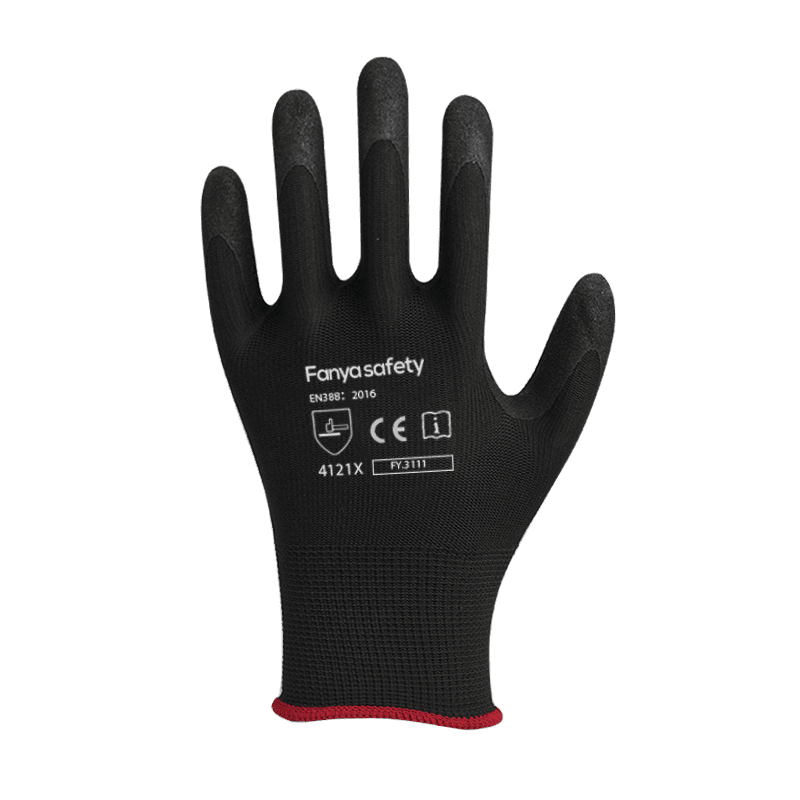
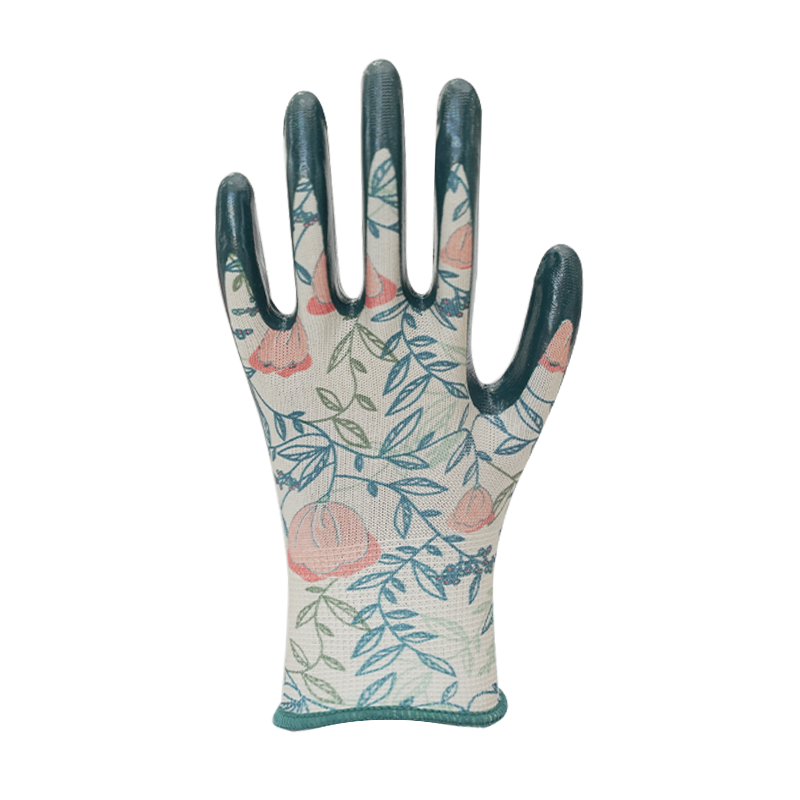
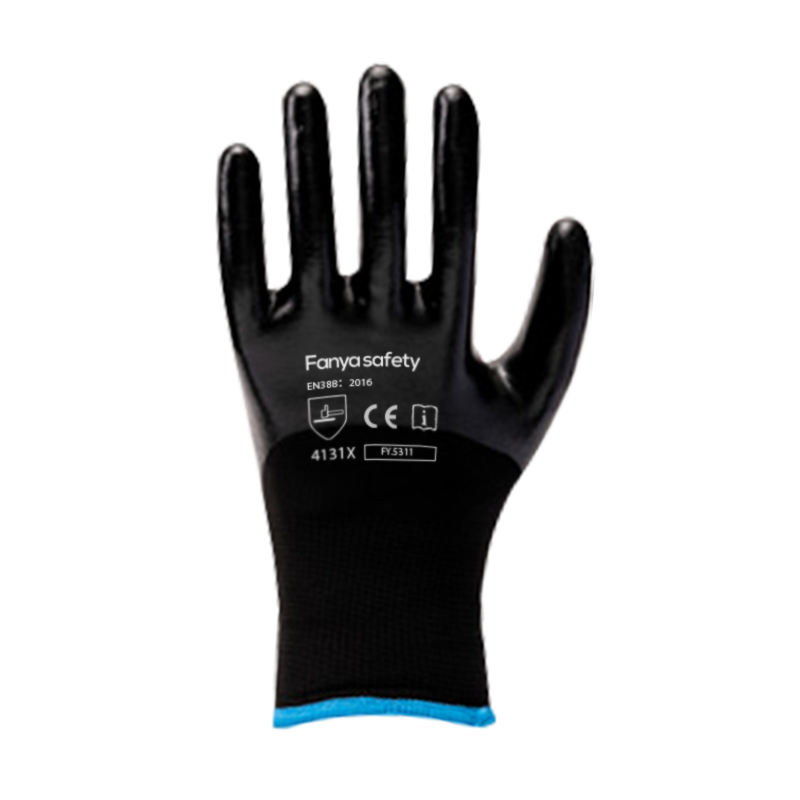
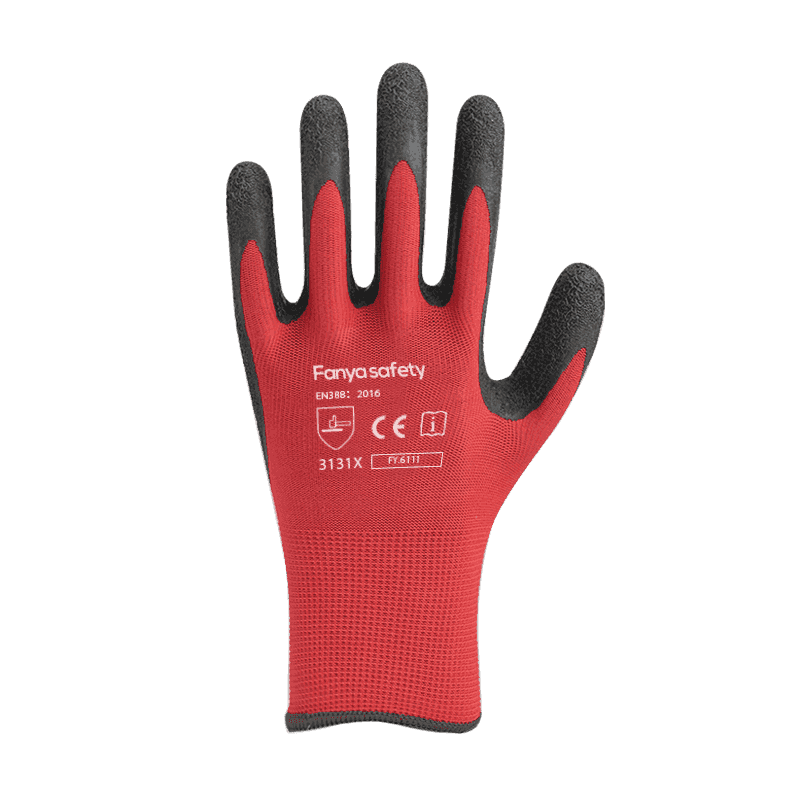
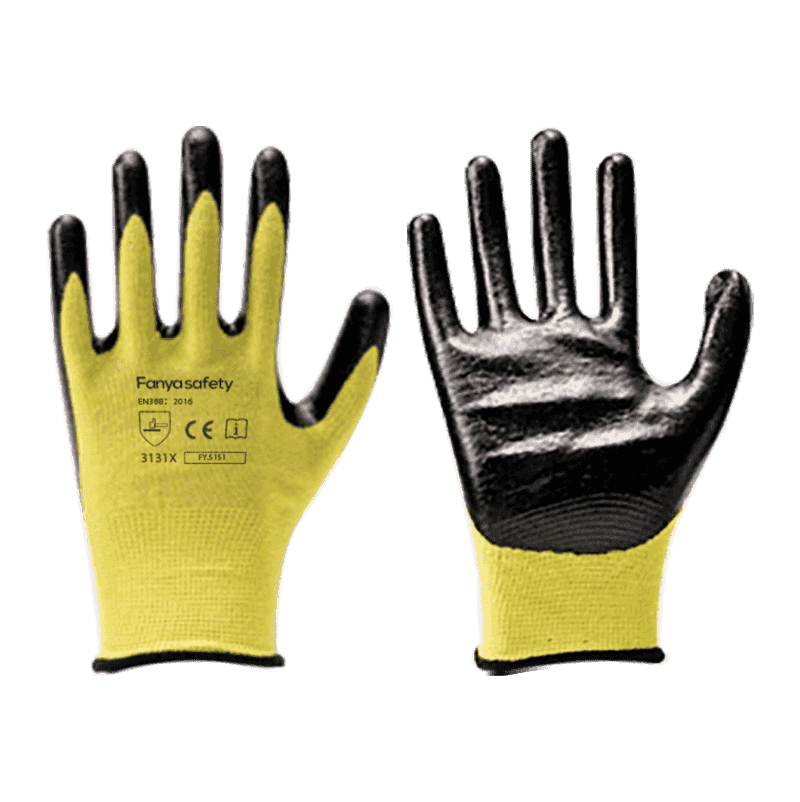
For environments with mechanical risks, reusable coated work gloves are the standard answer. A nitrile-coated glove on a breathable liner provides a strong grip in oily conditions while protecting against abrasion and small impacts. Instead of changing a flimsy disposable every few minutes, a worker wears one pair of coated gloves through a shift and replaces it when worn. See also what counts as a work glove and how the categories differ if you are building your first PPE programme.
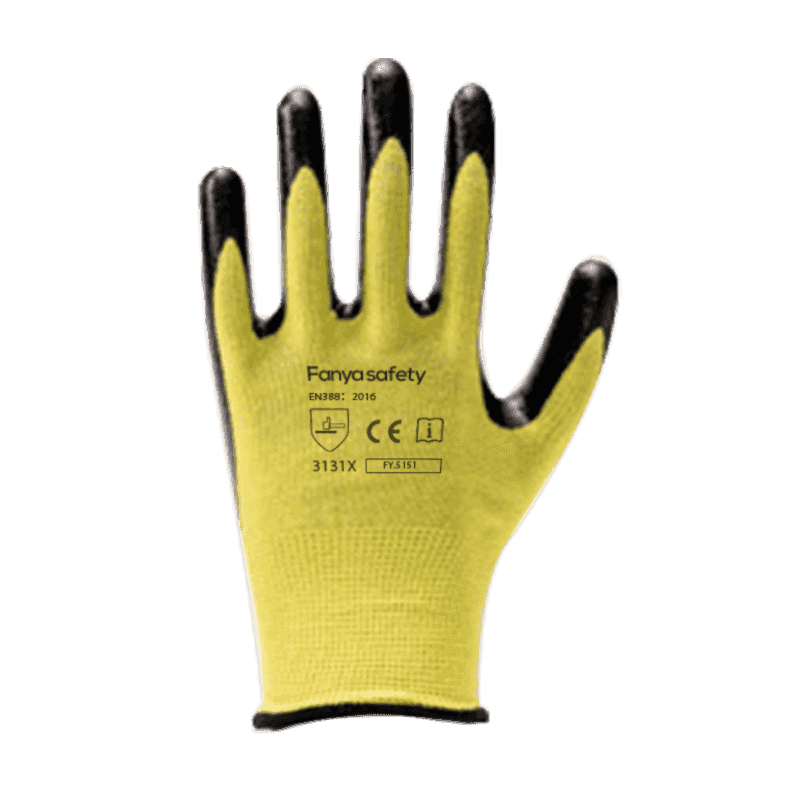 13G Bamboo Liner Work Glove with Smooth Nitrile CoatingThis coated glove pairs a breathable bamboo liner with a smooth nitrile coating for good abrasion and slip resistance, making it a practical reusable option for oily or general maintenance tasks.View Product →
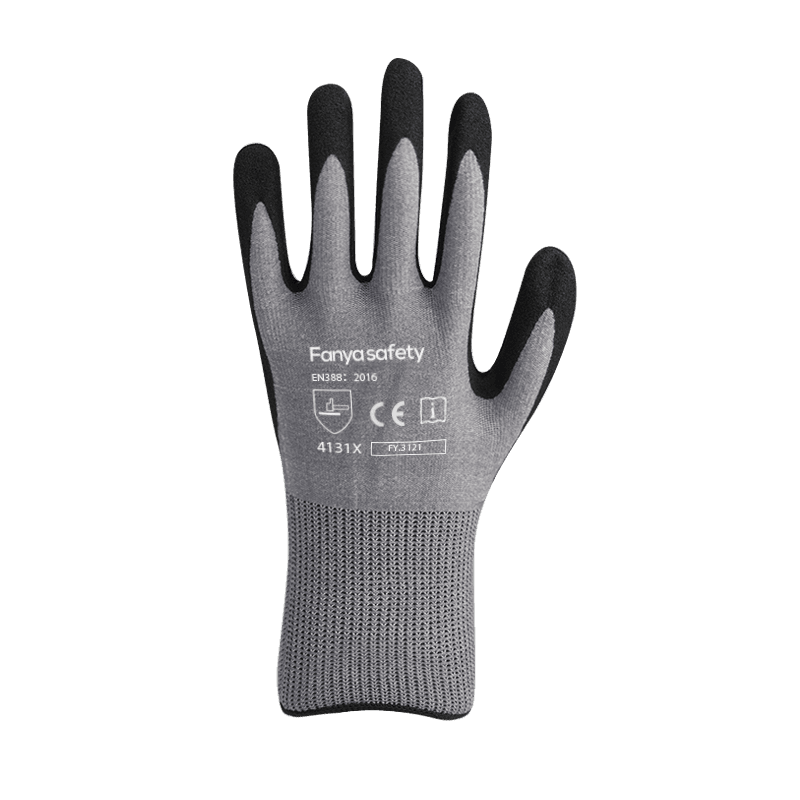
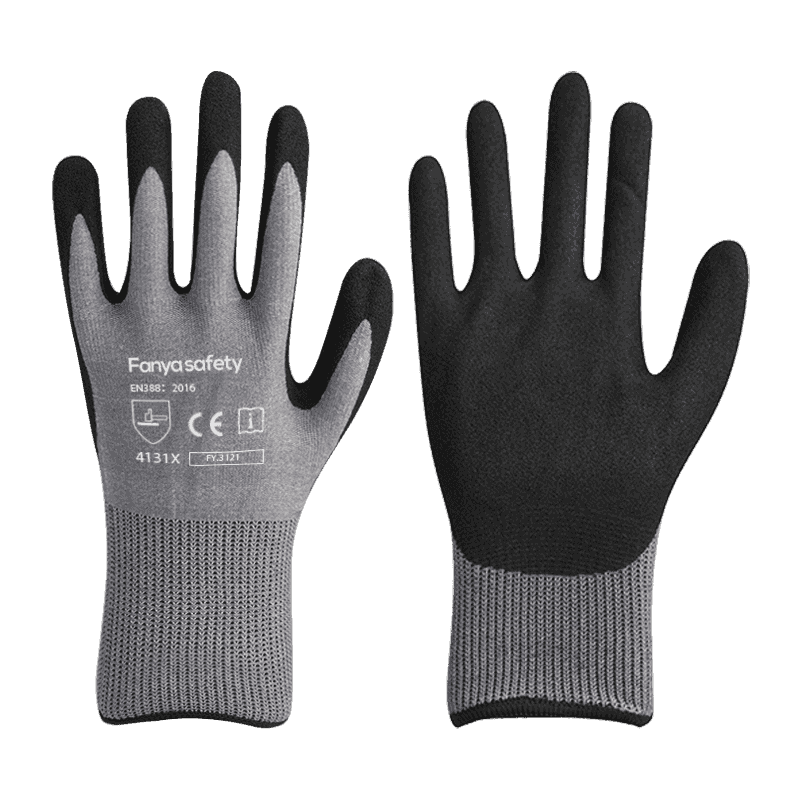
For cutting, grinding or handling sharp metal edges, cut-resistant liners with foam-nitrile or sandy-nitrile coatings offer a measurable layer of protection that no disposable vinyl can match. Workers who have cut through a vinyl glove while opening a steel strap understand the difference immediately.
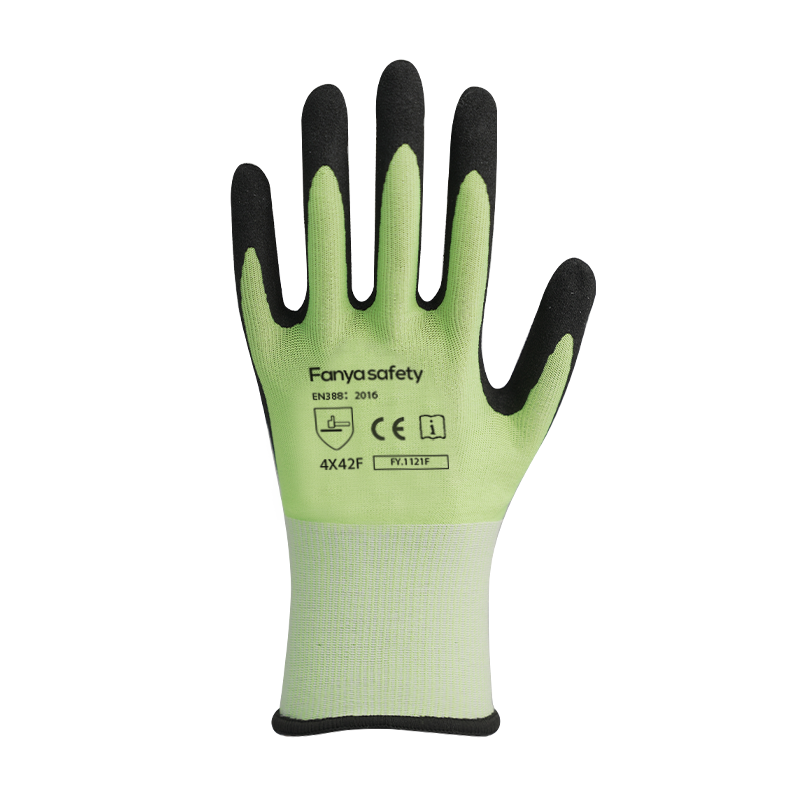 15G HPPE/Glass Fiber Cut-Resistant Glove with Foam NitrileA cut-resistant shell with foam nitrile coating delivers medium-level cut protection and superior grip in oily conditions, suited for glass handling, sharp parts, and maintenance.View Product →
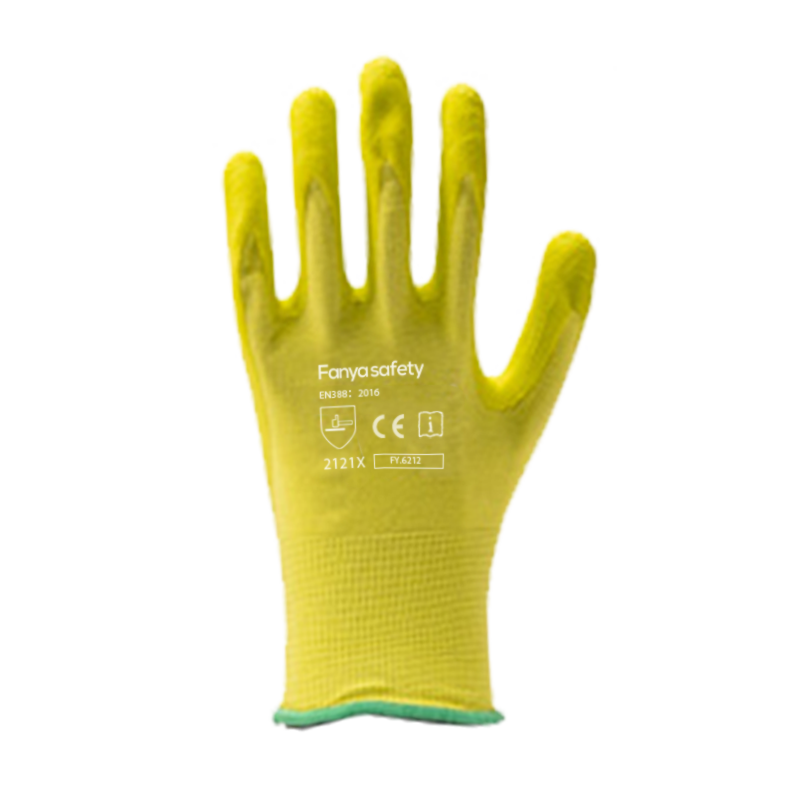
Even in general assembly, packaging and logistics, a latex-coated knit glove gives better abrasion resistance and grip than a vinyl film, with the added benefit of being reusable and producing less waste. The cost per workday of a reusable glove is often lower than the cost of a box of disposable vinyl consumed in the same period.
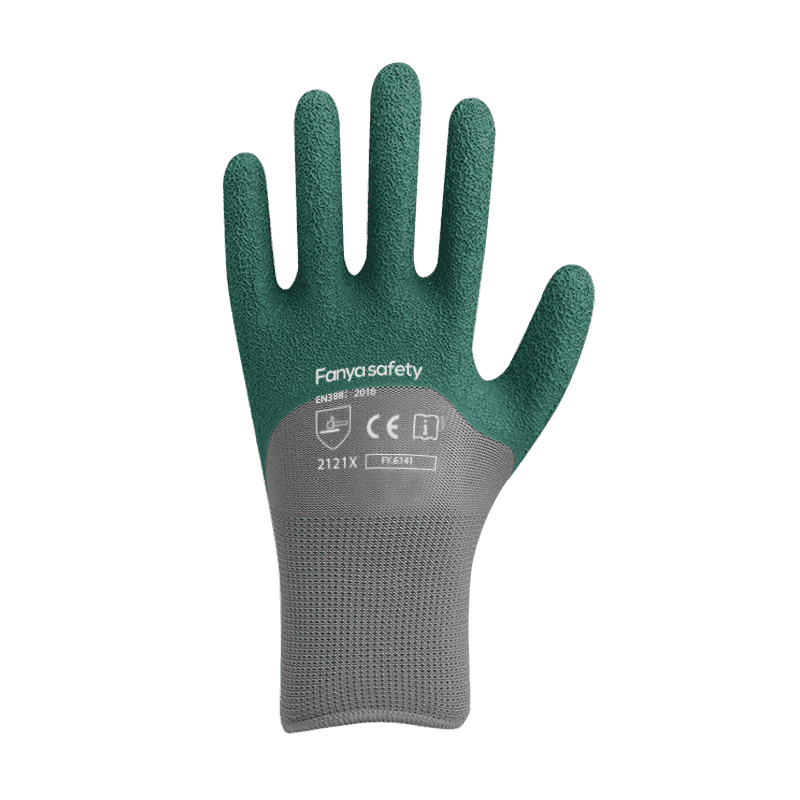 13G Polyester Knit Glove with Latex CoatingThis reusable glove offers a comfortable polyester liner and latex coating for puncture resistance and excellent grip, ideal for general assembly, packaging, or logistics tasks.View Product →
The key is to match the glove to the actual hazard. Disposable vinyl is a hygiene glove; a coated work glove is a protection tool. Using each for its intended purpose is the fastest way to improve both safety and total cost.
Yes for short, low-risk food contact such as serving and wrapping. Avoid using vinyl for cutting raw meat, working with hot oil, or any task where the glove will be stressed for a long time. Nitrile is the safer default for those tasks.
Only for low-risk contact such as handling non-infectious urine or sweat. The FDA does not approve vinyl for procedures that involve blood, sputum or wound drainage; use nitrile or latex there.
Vinyl is free of latex proteins, so it will not trigger latex allergy. Some people develop contact dermatitis from phthalate plasticizers or powder residues, but this is far less common than latex allergy and usually mild.
For food service, the FDA Food Code recommends changing single-use gloves at least every four hours and sooner if torn or contaminated. For industrial or chemical exposure, the practical limit is much shorter; when a vinyl glove tears, stop the task and change immediately.
No. Vinyl offers negligible protection against most solvents, fuels, ketones and concentrated acids. Use nitrile or a specialist chemical-resistant glove when your task involves anything stronger than diluted water-based detergents.
Nitrile. It is more puncture-resistant, more chemical-resistant and fails less often during real use. Vinyl is only "safer" in the narrow sense that it is cheaper for short, low-risk tasks where barrier failure would not cause harm.
Vinyl gloves are safe when the risk is low, the task is short and failure causes no harm. They are not safe for blood exposure, strong chemicals, sharp objects, hot food, or prolonged high-friction work. Those tasks call for nitrile examination gloves or, in industrial work, reusable coated gloves that combine cut resistance, grip and durability.
Before you buy another carton of vinyl, audit the task: what liquids, edges and force will the glove face? If the answer is something sharper, harsher or heavier than a serving fork and a damp cloth, choose a stronger material. The few extra cents per pair buy a great deal of certainty.
No previous article
Nitrile Gloves Chemical Resistance: A Practical Guide with Chart, Evaluation, and FAQ
Your email address will not be published. Required fields are marked *
You can contact to me using this form.