
 中文简体
中文简体

Product Consultation
Your email address will not be published. Required fields are marked *
Content
A technician cleaning a spray booth with solvents needs a glove that will not swell or crack when it touches acetone. A lab worker handling dilute acids often chooses nitrile because it resists chemical penetration without triggering a latex allergy. Nitrile gloves, made from synthetic nitrile butadiene rubber, are the preferred hand protection in industries where oils, solvents, punctures, and allergens are real daily hazards. This guide explains what nitrile gloves are made of, how they differ from latex and vinyl, and how to select the right pair for your specific workflow.
Nitrile butadiene rubber (NBR) is a synthetic elastomer created by copolymerizing acrylonitrile and butadiene. The resulting material has the elasticity of natural rubber but does not contain the natural proteins found in latex, making it safe for people with latex allergies. The production process begins with an emulsion polymerization of the two monomers, followed by coagulation, washing, drying, and compounding with additives such as stabilizers, accelerators, and fillers. Manufacturers then form the compound into either thin disposable gloves or a thick coating applied to a fabric liner.
Disposable nitrile gloves are formed as a single, thin layer of pure NBR using dipping technology. Their thickness typically ranges from 3 mil to 8 mil, where higher mil values provide stronger chemical and puncture resistance. Laboratory technicians, pharmaceutical workers, and food handlers prefer these gloves because they offer a high level of tactile sensitivity and allow fine hand movements without compromise. They are single-use products designed for short-term tasks where the main goal is preventing skin contact with chemicals, biological samples, or food ingredients.
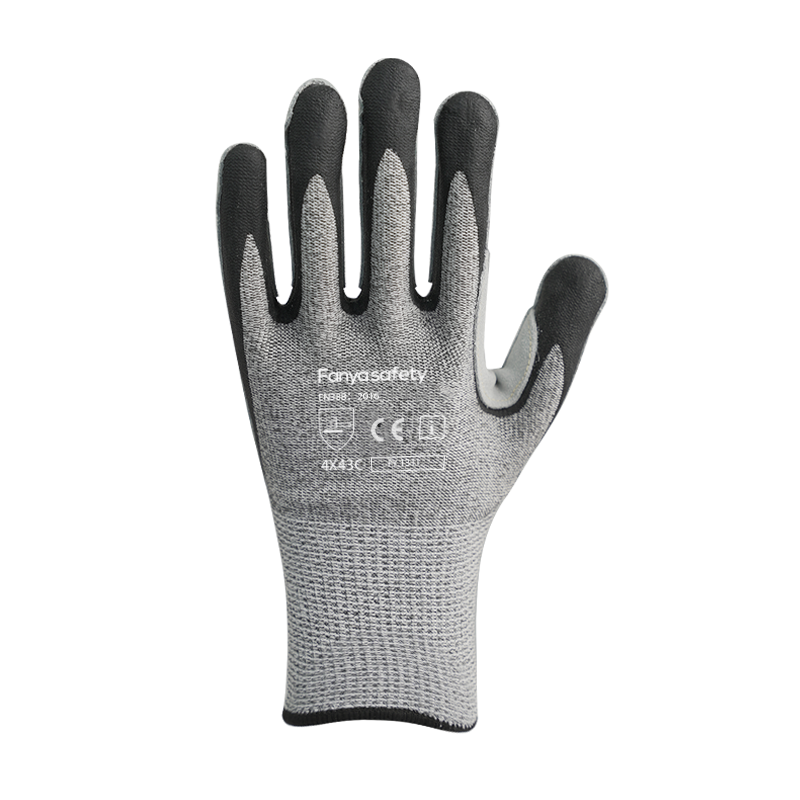
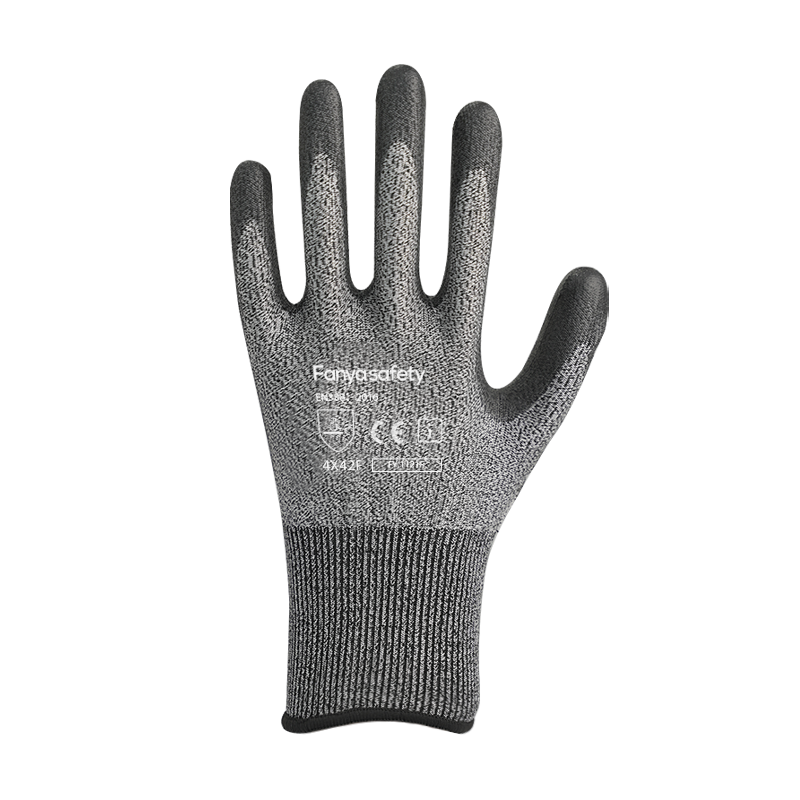
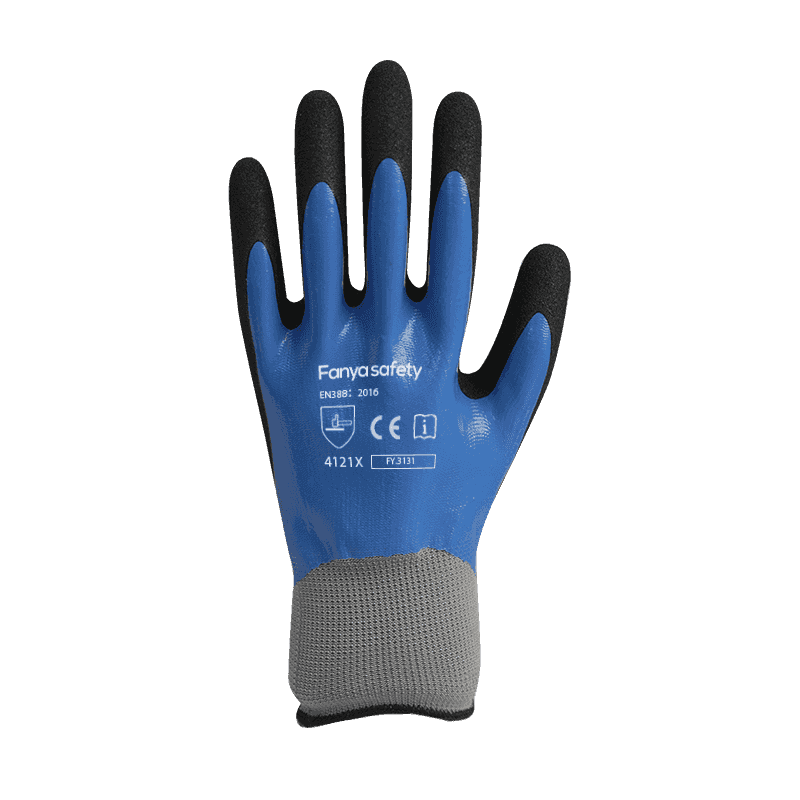
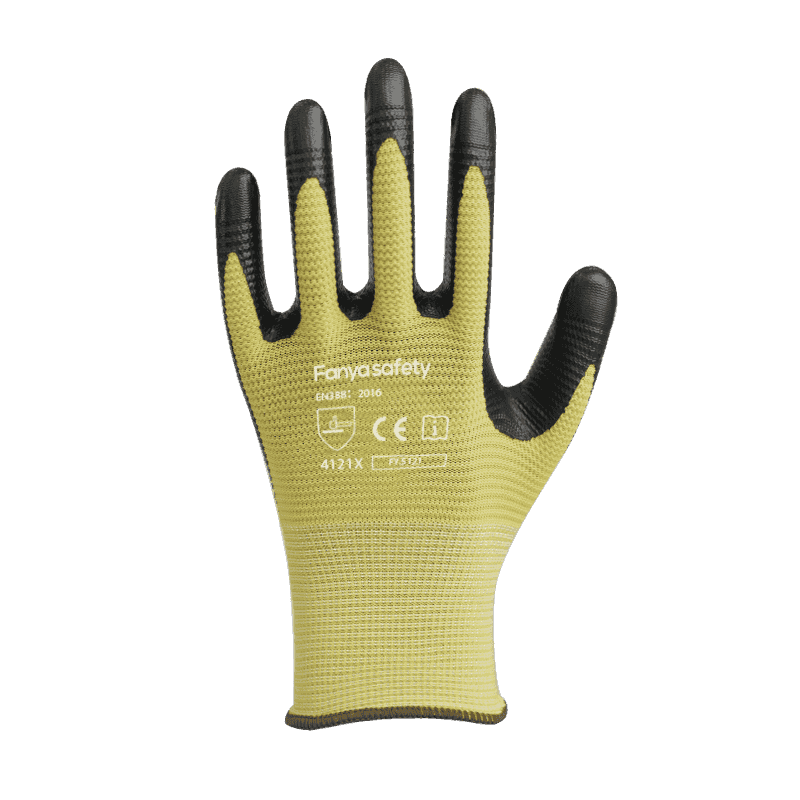
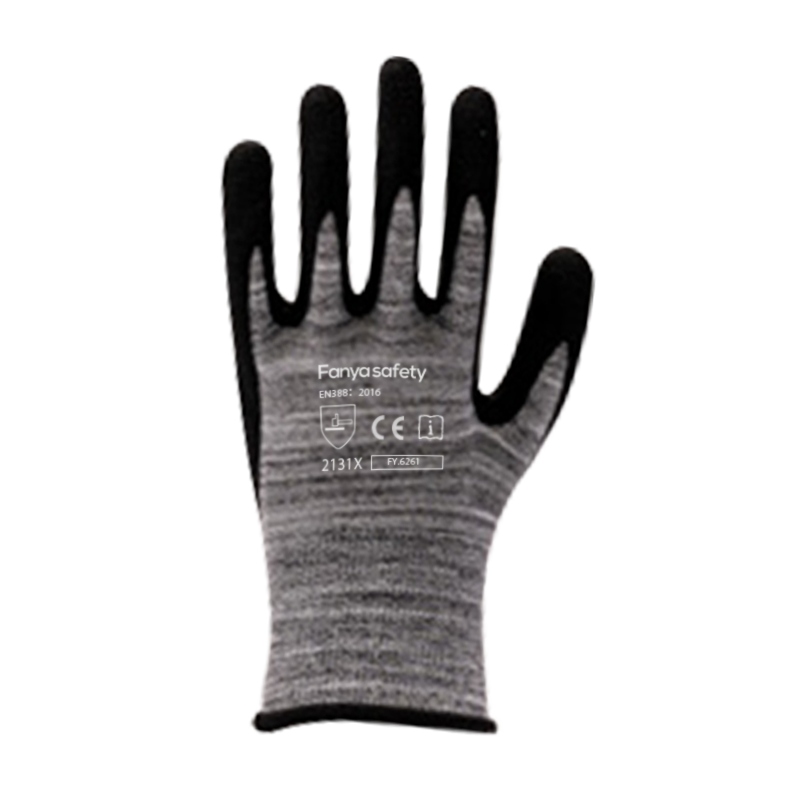
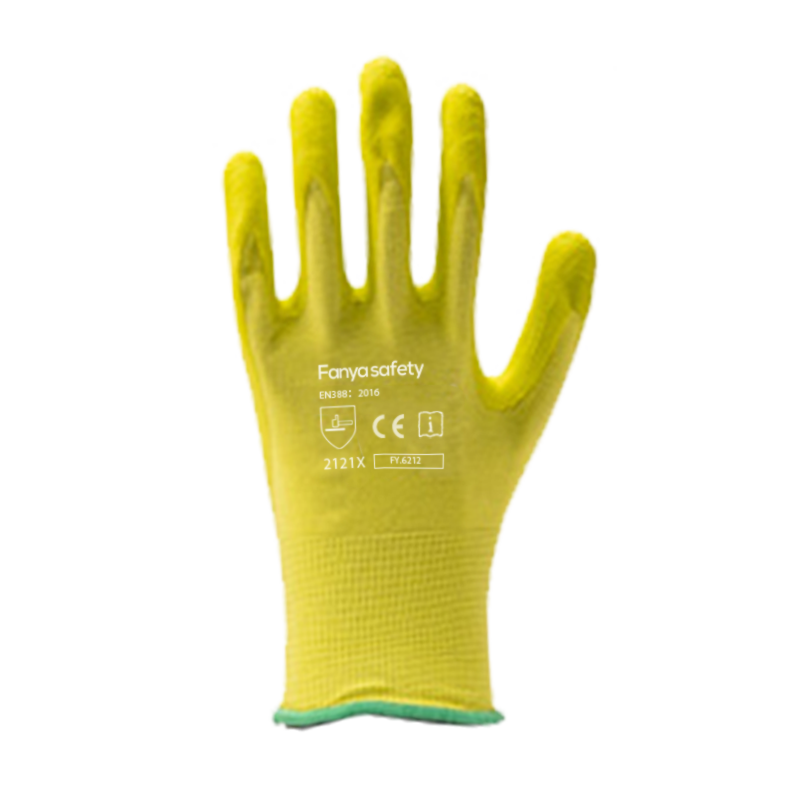
Coated nitrile gloves are built on a textile liner made of nylon, polyester, bamboo fiber, or high-performance polyethylene. The liner is dipped into liquid nitrile, leaving a protective coating either on the palm, the palm plus fingers, or the entire hand. A 3/4 coating covers the palm, thumb sides, and parts of the fingers, which makes the glove suitable for general handling tasks. Full coating extends protection to the entire hand surface. These gloves are reusable and offer a balance between grip, comfort, and abrasion resistance.
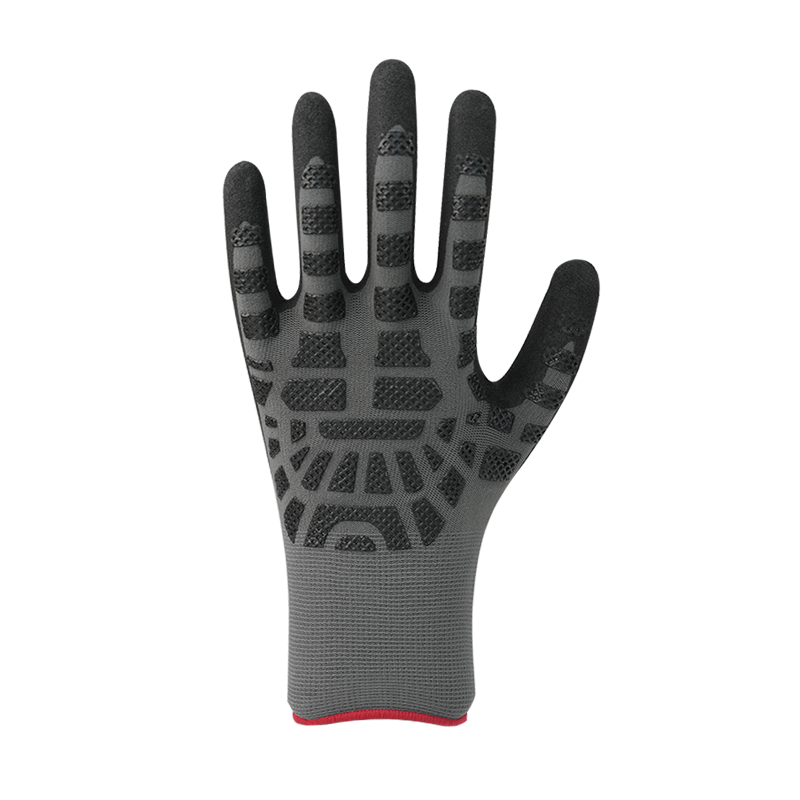
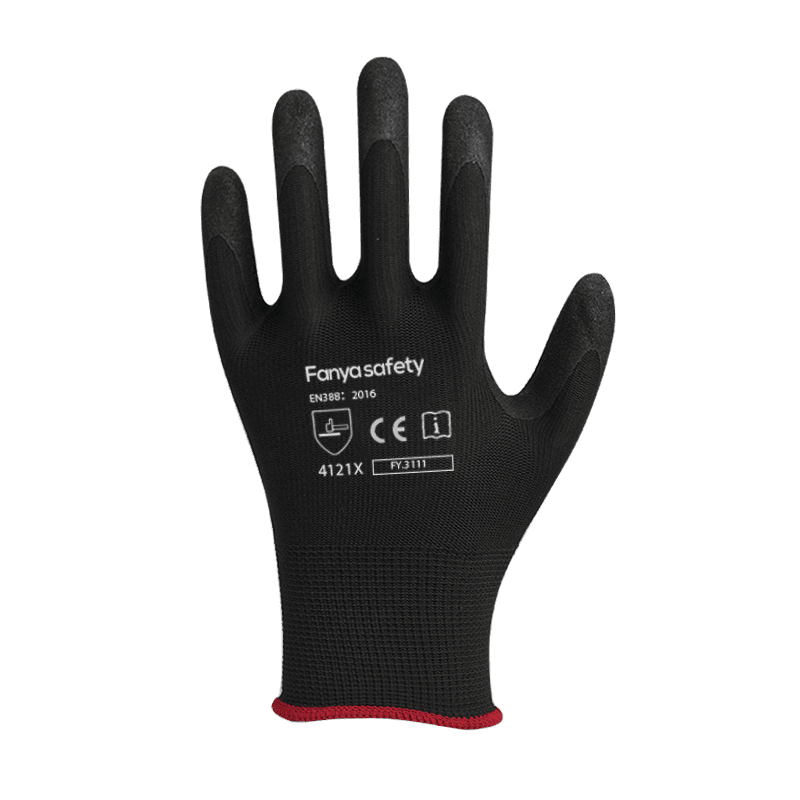
The surface texture of the coating affects performance. Foam nitrile coating absorbs a small amount of oil and moisture on the palm side, improving grip in light-oil environments. Sandy nitrile coating creates a rough, grainy surface that delivers reliable grip on wet or oily objects. Plain nitrile coating is smooth and flexible, making it a good choice for dry handling and precision assembly. When you select a coated nitrile glove, the coating style must match the material conditions of the job.
Many buyers compare nitrile directly with latex and vinyl gloves. Nitrile offers the broadest protection profile, especially when chemical exposure is part of the job. Latex provides excellent elasticity but carries a serious allergy risk. Vinyl is inexpensive but offers limited protection against punctures and chemicals. The table below summarizes the most important differences.
| Property | Nitrile | Latex | Vinyl |
|---|---|---|---|
| Material source | Synthetic rubber (NBR) | Natural rubber from rubber trees | PVC plastic |
| Chemical resistance | Excellent | Good but limited | Poor |
| Puncture resistance | Very good | Good | Low |
| Allergen risk | None | High for latex-sensitive users | None |
| Elasticity | Good | Excellent | Fair |
| Best use | Chemical handling, mechanical work, dexterity tasks | Highly flexible tasks where latex allergy is not an issue | Short-term food service and light assembly |
Nitrile is the only material in this comparison that combines synthetic chemical resistance with a latex-free composition. Data from the Encyclopedia Britannica confirm that nitrile butadiene rubber is a copolymer of acrylonitrile and butadiene, a classification that sets it apart from natural latex and fully synthetic PVC. For industrial buyers, this means nitrile can handle a wider range of solvents, oils, and cleaning agents than vinyl, while also avoiding the allergic complications of natural rubber.
Nitrile gloves have a specific performance profile that shapes how and where they are used. Understanding these characteristics helps you choose the right glove for a task without overspending on protection you do not need.
A common mistake among first-time buyers is assuming that all nitrile gloves are the same. The difference between a 3 mil disposable glove and a 15G nylon-lined foam nitrile glove is enormous. The first is a thin barrier for a one-hour laboratory task; the second is a robust work glove for an eight-hour shift in an automotive repair shop. Before you compare prices, identify the actual hazards, the duration of use, and whether the worker needs mechanical protection or only chemical protection.
Your primary goal is a glove that fits the hazard, the task, and the wearer. Begin with a hazard assessment. If the job involves oils, mild solvents, or water, a coated nitrile work glove is likely the most economical choice. If the job involves frequent contact with strong acids or biological hazards, a disposable nitrile glove with a higher mil rating provides a better barrier.
The liner determines the comfort and base strength of a coated nitrile glove. Nylon liners are flexible and quick-drying. Polyester liners offer a soft, smooth feel and good dimensional stability. Bamboo fiber liners provide breathable comfort and natural moisture management, making them a good option in warm environments. For cut-risk applications, choose a liner made with HPPE or a fiber blend that includes steel wire.
Knit gauge is the number of needles used per inch in the liner. 13G is the most common gauge for coated work gloves and represents a medium weight. 15G and 18G are finer gauges that offer better dexterity and touch sensitivity. The 10G gauge is heavier and provides more bulk but reduces hand dexterity. For tasks that involve precise hand movement, select a 15G or 18G liner. For rough material handling where abrasion is the biggest concern, a 13G liner is more suitable.
Choose the coating based on the surface condition of the objects you handle. Plain nitrile is ideal for dry, clean parts. Foam nitrile handles light oil well and allows breathability. Sandy nitrile provides a strong grip on wet or oily surfaces and is often used in construction and heavy maintenance. If you work with a two-step process involving both wet and dry stages, a double nitrile coating can provide extended service life.
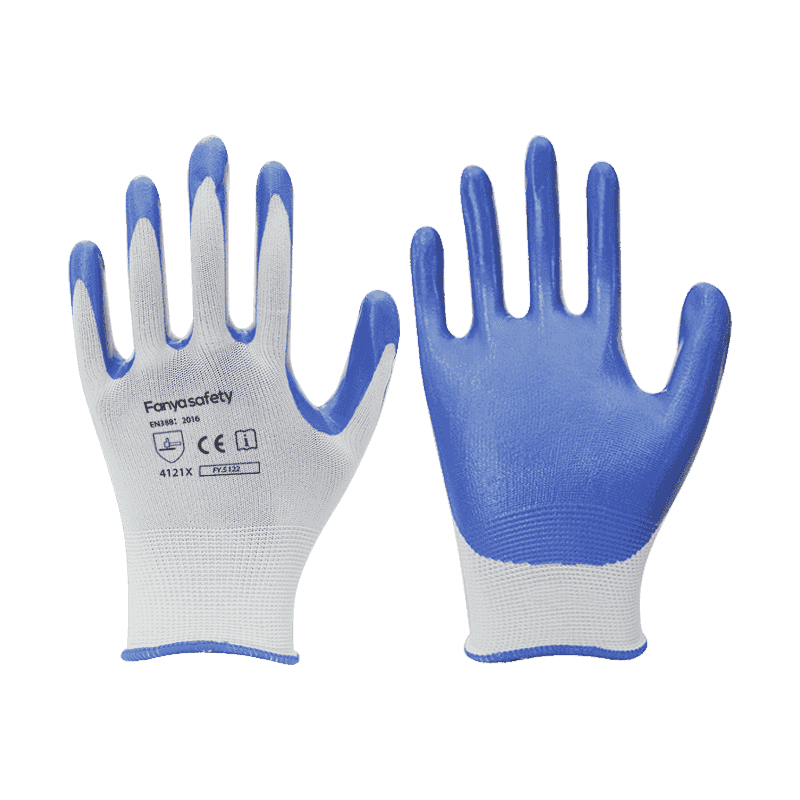
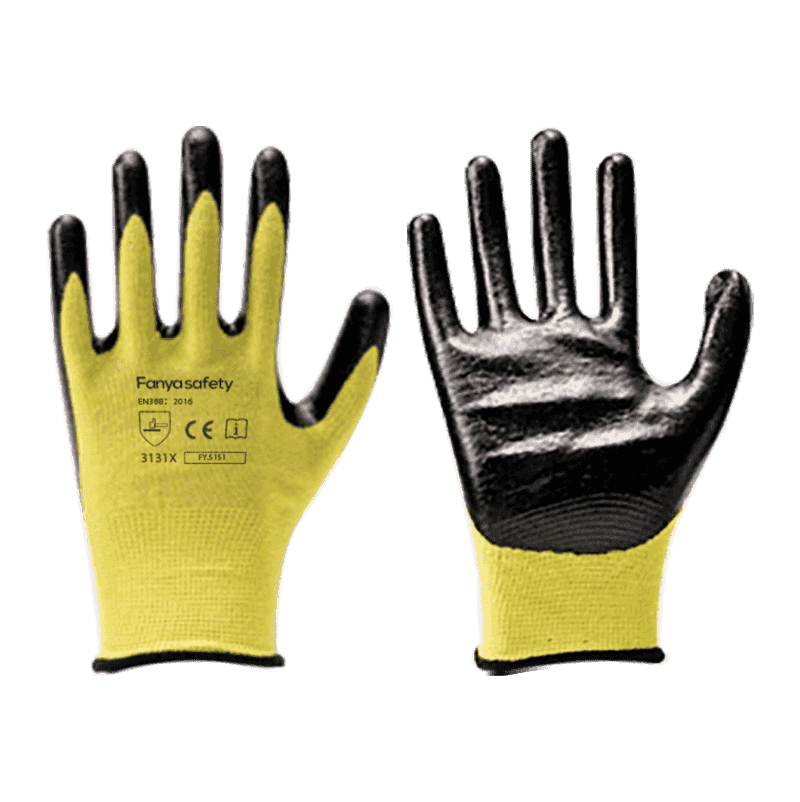
After weighing these factors, you are ready to select a product. The following items are examples of coated nitrile work gloves built for light to medium industrial workloads.
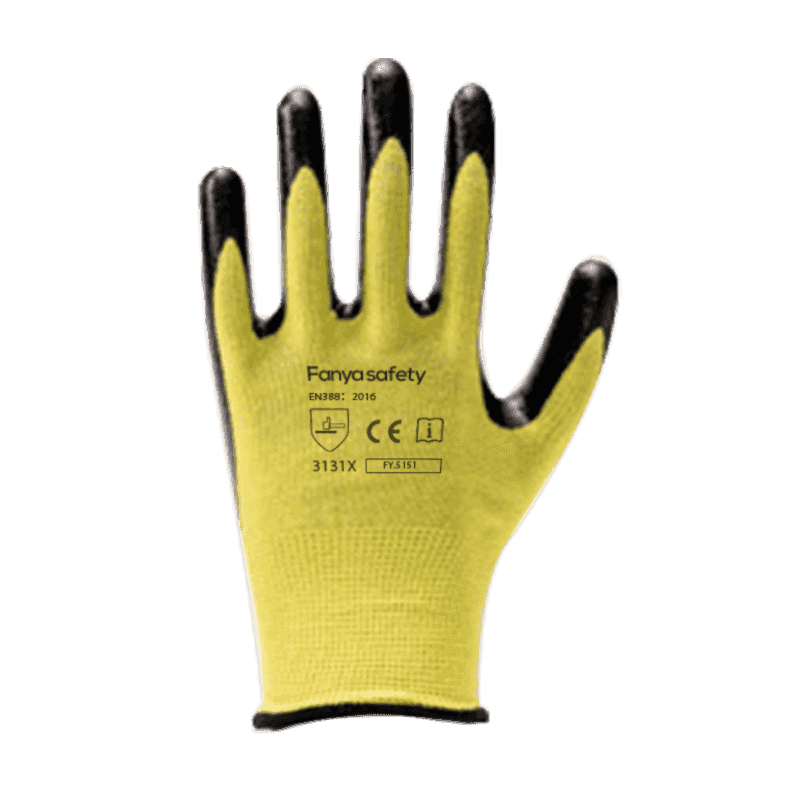 13-gauge bamboo liner work gloves with smooth nitrile coatingThese 13-gauge bamboo liner gloves feature a smooth nitrile coating for good abrasion and slip resistance, suitable for light to medium industrial maintenance and general handling tasks.View Product →
 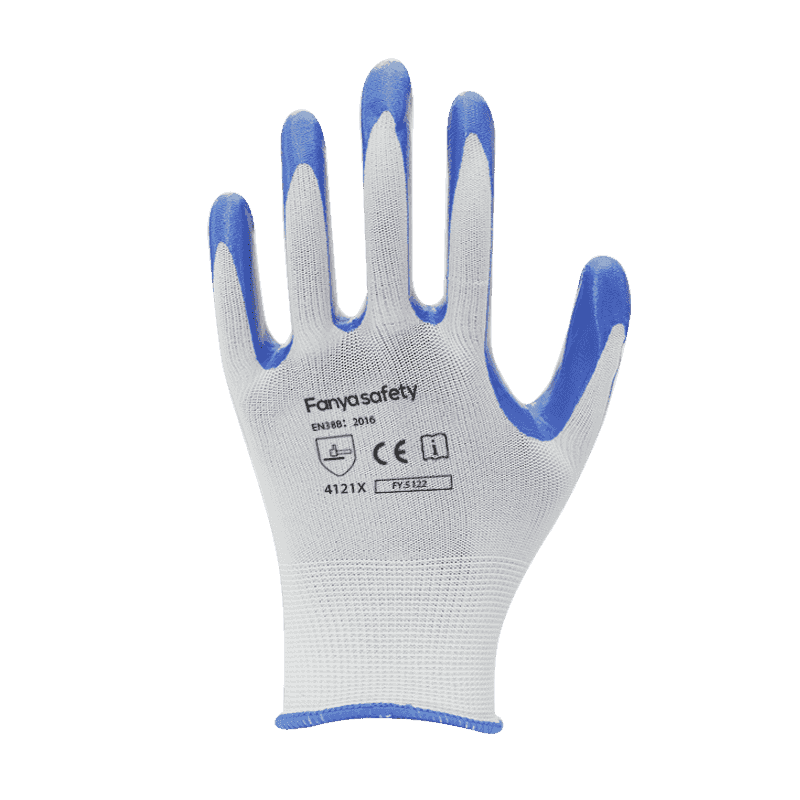 13-gauge high-elastic nylon liner gloves with smooth nitrile coatingMade with a 13-gauge high-elastic nylon liner, these gloves offer delicate touch, comfort, and elasticity. The smooth nitrile coating provides abrasion and slip resistance for maintenance and assembly work.View Product →
  13-gauge polyester ribbed liner gloves with smooth nitrile coatingThese 13-gauge polyester ribbed liner gloves ensure comfort and a good fit. The smooth nitrile coating adds abrasion and slip resistance, making them ideal for general maintenance and logistics tasks.View Product →
Coated nitrile work gloves are a popular category among buyers who need work gloves for assembly, maintenance, logistics, and general manufacturing tasks. The best way to evaluate a candidate glove is to place your order in parallel with a field trial. Test the glove on your actual workstations, measure how many pairs your team uses per week, and note any premature failures. That real-world data will tell you more about product quality than any marketing description.
Yes. Nitrile gloves are manufactured from synthetic nitrile butadiene rubber and contain no natural rubber proteins found in latex. This makes them suitable for individuals with latex allergies and for environments where latex proteins must be strictly controlled, such as pharmaceutical and food processing facilities.
For most industrial applications, nitrile gloves are a better choice because they combine good chemical resistance, puncture resistance, and abrasion resistance with a latex-free composition. Latex offers superior elasticity, and that makes it preferable for very high-precision tasks, but the allergy risk and lower resistance to oils and solvents make it less practical as a general-purpose glove.
They cover a wide range of environments: chemical laboratories, pharmaceutical manufacturing, food processing, automotive repair, machine assembly, painting, cleaning, and general mechanical work. Disposable nitrile gloves are most common in labs and food handling; coated nitrile work gloves are standard in industrial and maintenance settings where abrasion and grip are equally important.
Disposable nitrile gloves are a single thin layer of pure NBR, used for short tasks that focus on barrier protection. Coated nitrile gloves consist of a textile liner with a nitrile coating and are reusable, higher-strength products built for mechanical protection. If you are looking for a durable work glove, start with the coated category.
Coated nitrile work gloves are designed for repeated use and can survive multiple shifts when inspected and maintained. Disposable nitrile gloves are not intended for reuse. If a disposable glove is removed, it may develop microscopic tears or contamination, so it must be disposed of properly. Always inspect coated gloves before every shift for cracks, holes, or stiffness.
The fitting rule is snug but not restrictive. The palm should feel firm and the fingers should have enough space to close fully. If a glove is too tight, circulation is reduced and hand fatigue increases. If it is too loose, grip accuracy and protection suffer. Measure the circumference of the dominant hand at the widest point to find the correct size chart measurement.
For a deeper look at how nitrile coatings are applied to work gloves, explore our detailed guide on nitrile coated gloves.
Your email address will not be published. Required fields are marked *
You can contact to me using this form.